
This article explains how wireless and residential internet offerings aimed at adults aged 55 and older are structured by a major national telecom provider, focusing on plan components and key technical features. It describes the typical elements that define such service bundles: pricing models, data allowances, speed tiers, network coverage, voice and calling options, required equipment, eligibility rules, and contractual terms. The intent is to clarify how these elements interact so older adults and their families can understand what the plans include and what trade-offs may exist between cost, data, and performance.
The discussion emphasizes neutral, factual distinctions rather than recommendations. It frames plan structure as a combination of recurring charges (monthly access, line fees), one‑time or recurring equipment costs, usage allowances (data caps, throttling thresholds), and optional features (international calling, hotspot access). For home internet, the components also typically include the delivery technology (fiber, fixed wireless, DSL or cable), expected speed ranges, and any installation or rental arrangements for gateways and routers. Eligibility and verification processes for age‑targeted plans are treated as administrative aspects that may vary by provider and market.

Plan structure and pricing commonly use tiered monthly rates where the base fee covers access and a standard set of features, and optional items can raise the cost. For age-focused plans, eligibility is often limited to customers who meet a minimum age requirement and may require identity or age verification. Pricing presentations typically show recurring monthly charges and, when applicable, equipment rental or one‑time installation fees. Promotional introductory pricing can appear in provider materials, but ongoing rates are the relevant figure for long‑term budgeting and may change with service updates or contractual terms.
Data allowances and usage management techniques are central to how wireless plans operate. Some plans may advertise “unlimited” data but implement network management policies where data speeds are reduced after defined usage thresholds or during network congestion. Shared data arrangements or multi‑line discounts may alter per‑line allowances. For home internet, advertised speeds are usually presented as “up to” figures; actual throughput at a given location can depend on network load, technology used, and the quality of in‑home equipment. Understanding these qualifiers helps set realistic expectations.
Network coverage and signal quality are influenced by the provider’s radio access footprint and local infrastructure. Wireless voice and data performance vary by geography and may be affected by building materials, terrain, and local cell site density. Home internet delivered over fiber generally provides higher sustained speeds and lower latency than fixed wireless or DSL, while fixed wireless can be a viable option where wired infrastructure is limited. Consumers often compare coverage maps and independent coverage reports to assess likely service quality at specific addresses.
Calling features and accessibility options are often included in plans for older adults, such as simplified voicemail, unlimited domestic calling, or the availability of landline‑style voice over IP. Many providers document supported features and how they are configured on account portals or via customer service. For mobile plans, handset compatibility and voice codecs can affect call clarity; for home internet voice services, the presence of battery backup and emergency calling support are technical factors to confirm, as they may differ across technologies and equipment choices.
In summary, plan structure for age‑targeted wireless and home internet services is a composite of eligibility rules, recurring charges, data and speed allowances, network coverage, and equipment arrangements. Each element may influence cost and performance in different ways, and published terms often include qualifiers about speed and data management. The next sections examine practical components and considerations in more detail.

Plan structures for senior‑focused offerings typically combine a base monthly access fee with optional features and potential discounts tied to age verification. Eligibility frequently requires a minimum age (commonly 55 or older in many offerings) and basic identity confirmation. Some plans apply pricing per line, while others provide multi‑line pricing that may change the effective cost per user. Administrative elements such as account ownership, required identification, and whether existing account holders can add eligible lines can affect how easily a household accesses an age‑targeted plan.
Billing details may include equipment rental fees, one‑time installation charges, and taxes or regulatory surcharges that are often itemized separately from the advertised rate. Providers may outline introductory promotional rates that increase after a defined period, so assessing the regular monthly rate is important for long‑term comparisons. Contract terms vary: some services operate month‑to‑month while others have promotional commitments; early termination fees or equipment payoff balances can apply if a customer ends service prematurely.
Age‑restricted plans can include limitations on transferring the plan to another user or combining it with certain other discounts. When comparing structured plans, consumers can consider whether the plan permits device financing, supports mobile hotspot usage, and includes standard features like voicemail and caller ID. Accessibility features, such as large‑print billing, speech assistance, and simplified device settings, may be available but are not uniform across offerings and should be confirmed in provider documentation.
Service activation procedures and documentation requirements differ by provider and region. Some providers allow online verification of age and identity, while others require in‑store visits or mailed documentation. The chosen activation path can influence the time to service start and whether installation must be scheduled for home internet technologies that require a technician. These operational aspects are part of plan structure because they affect initial costs and the user experience during onboarding.
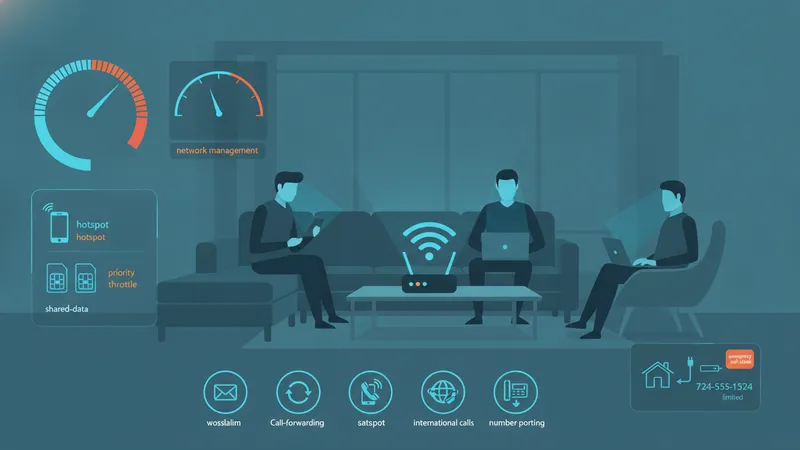
Data management policies may characterize a wireless plan as unlimited while applying network management after a threshold is reached; this means sustained peak speeds could be reduced once a customer uses a certain amount of high‑priority data in a billing cycle. Shared data arrangements for household accounts can combine allowances across lines, which may be beneficial for some households but can create contention if one line uses disproportionate data. Understanding whether a plan includes explicit mobile hotspot allowances and whether hotspot traffic is prioritized differently is part of evaluating data features.
Calling features offered in conjunction with plans vary from basic domestic calling to bundles that include voicemail, call forwarding, and international calling allowances. For home internet voice services, providers may offer VoIP with an assigned number or the option to port an existing number; such services may depend on the internet connection type and have different reliability characteristics compared with traditional copper landlines. For both mobile and home voice, confirm the presence of emergency calling support and any limitations associated with power outages or equipment dependency.
Shared line pricing structures often provide per‑line discounts as more lines are added, but the marginal saving per added line can differ by plan and promotional period. Some senior‑focused plans may limit the number of lines eligible for a discount or require all lines on an account to meet the age criterion. Account management tools commonly allow primary account holders to allocate features or controls to secondary users, which can be relevant for older adults who rely on caregivers to assist with billing or feature configuration.
When assessing data and calling features, consider typical household patterns: lower daily data use that is primarily for email and video calls will have different needs than households using streaming video or large downloads frequently. Many providers publish guidance on typical usage for standard activities (e.g., video streaming, browsing) which can help estimate whether a plan’s allowance is likely to be sufficient. These usage patterns, combined with plan policies, determine whether a plan’s data and calling structure matches a household’s needs.
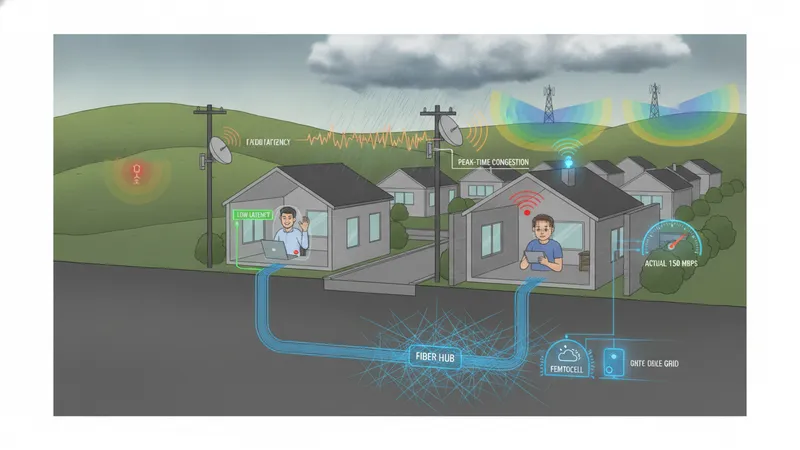
Coverage maps and advertised speed tiers are starting points for understanding likely performance, but real‑world speeds and reliability can vary by location. For wireless service, coverage depends on the density of cell sites, spectrum holdings, and local geography; indoor signal strength may be reduced by building materials. For home internet, fiber tends to provide the most consistent high throughput and lower latency, whereas fixed wireless performance is more sensitive to line‑of‑sight and weather conditions. Providers typically qualify advertised speeds as “up to” figures, and actual experience may be lower during peak network load.
Latency is a significant performance metric for real‑time applications such as video calls and remote consultations; fiber and cable connections usually deliver lower latency than fixed wireless or DSL. Signal quality for mobile devices can be improved with external antennas, Wi‑Fi calling, or femtocell‑style in‑home boosters where offered, although these features depend on provider support and device compatibility. Network congestion policies may deprioritize traffic for certain accounts during peak times, which can affect perceived responsiveness.
Speed tests conducted at the premises can provide an empirical view of typical throughput and peak performance. Running tests at different times of day gives a sense of variation due to network load. For households that rely on video calling or teleconferencing, symmetric or higher upload speeds can be important; many consumer plans emphasize download speed, so upload capability should be verified separately. Where precise performance is critical, checking third‑party coverage and speed reports can offer an independent perspective on likely service quality.
When evaluating networks, consumers may consider redundancy options such as using a cellular hotspot as a backup for home internet outages. The usefulness of redundancy depends on data allowances and hotspot speeds. Documented service level commitments and reported outage frequencies in a region can also inform expectations, but historical reliability does not guarantee future performance. These factors together shape realistic expectations for service in a given location.
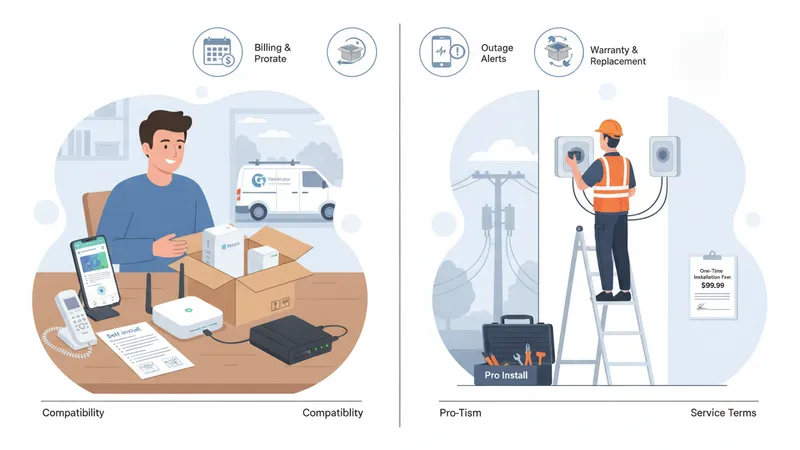
Equipment options commonly include provider‑supplied gateways and modems, which may be rented monthly or purchased outright. In some cases, using a personally owned router or modem is allowed, but compatibility requirements can restrict this choice. Installation may be self‑install with shipped equipment or professionally installed when wiring or specialized mounting is required; professional installation can incur a one‑time fee. Battery backup for voice equipment and documentation of emergency calling behavior are technical details often included in service terms and may vary by technology and provider.
Service terms cover factors such as billing cycles, prorated charges for mid‑cycle activations or cancellations, policies on equipment returns, and procedures for reporting outages. Warranties or service guarantees are typically described in provider terms of service and may offer remedies such as repair or replacement for faulty equipment. Maintenance responsibilities are usually split: providers maintain network infrastructure while in‑home wiring and user‑configured equipment are often the customer’s responsibility unless covered under a support plan.
Software updates to gateways and firmware for devices can affect performance and security; many providers push updates automatically, while some allow manual control. Security considerations include default password changes, enabling WPA3 or WPA2 encryption for Wi‑Fi, and keeping device software current. For older adults, simplified setup options and remote support capabilities may be available and can reduce support burden for caregivers, though the availability of these services and any associated fees should be reviewed in the provider’s documentation.
Termination and transfer policies are practical considerations: if a customer moves, the ability to transfer service to a new address depends on local network availability and may require new installation or a different technology. Early termination charges or remaining equipment balances can affect the cost of switching services. Reviewing contract terms and support channels for ongoing maintenance can help set expectations for total cost of ownership and service continuity.

Plans targeted at older adults combine multiple structural elements—eligibility rules, pricing tiers, data and calling allowances, coverage, equipment, and contractual terms—that jointly determine suitability for a household. Each element may introduce trade‑offs: lower monthly rates can coincide with lower data thresholds or reduced priority during congestion; higher advertised speeds may require fiber connectivity. Understanding how these parts interact helps frame practical questions such as whether included equipment supports needed features, how data policies affect typical usage, and what installation or ongoing costs might apply.
When comparing options, attentive review of plan documentation for qualifiers—such as throttling thresholds, equipment fees, and eligibility criteria—can clarify real costs and limitations. Consideration of in‑home networking needs (number of simultaneous devices, expected activity like video calls) together with coverage and performance indicators provides a clearer picture of whether a plan aligns with practical requirements. Independent speed tests and local coverage reports may supplement provider materials for a more complete assessment.
Service continuity and support are also important: the availability of remote assistance, ease of account management, and clarity of service terms affect long‑term satisfaction. For voice services, understanding emergency calling capabilities and backup options is particularly pertinent. Equipment ownership options and maintenance responsibilities should be examined to determine whether monthly rental or purchasing a device is more appropriate for a given user’s circumstances.
Overall, reviewing the structural elements and technical features with cautious, evidence‑based expectations may assist older adults and their families in matching a plan’s characteristics to practical needs. Additional sections and provider documentation can provide specific technical specifications and current plan details if needed. The material above is intended as neutral, factual context to inform further research and discussion.